Chiropractor in Keller, TX — Personalized Care That Actually Listens
Firm Foundation Wellness Center is an Old Town Keller chiropractic practice built around longer one-on-one visits, a thorough examination, and a plan based on how you move, what may be contributing to the problem, and what you want to get back to doing.
Care starts with understanding how you move and what may be contributing to the problem. The plan can combine chiropractic adjustments with movement assessment, corrective exercise, and soft-tissue work when appropriate.
A More Personalized Approach to Chiropractic Care
Every visit is with Dr. Corey. Care is not built around a high-volume protocol; the history, examination, movement findings, goals, and response to care guide what is recommended.
Chiropractic Adjustments
Specific chiropractic adjustments are selected for the individual and can include spinal or extremity care when clinically appropriate.
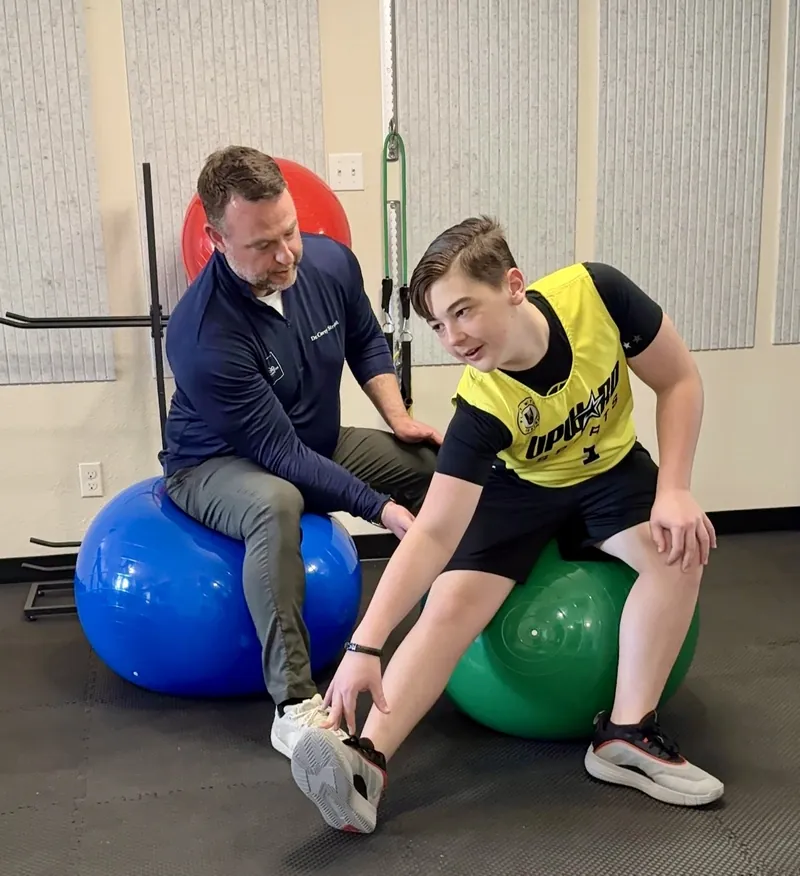
Rehabilitation is matched to the examination findings and can include mobility, stability, strength, coordination, and progressive return-to-activity work.
Active adults and athletes receive a movement-informed plan designed to address the current problem while rebuilding capacity for the activities that matter to them.
Recurring or long-standing symptoms are approached by looking beyond the painful spot at movement, joint function, loading, daily habits, and other relevant contributors.
Care is adapted to the person in front of Dr. Corey, with age-appropriate communication and technique for children, teens, adults, parents, and older adults.
Posture is considered alongside movement and daily demands rather than treated as a single cause. Practical mobility, strength, and workstation strategies may be included when useful.
When headaches have a musculoskeletal component, the examination can assess neck motion, tension patterns, posture demands, and other mechanical contributors while screening for reasons referral may be needed.
Leg pain, numbness, or tingling can have more than one cause. The examination is used to determine whether the presentation appears mechanical and what type of care or referral is appropriate.
Some patients continue periodic care after an active problem improves to support mobility, function, and an active lifestyle; frequency is individualized rather than pre-packaged.
New-patient visits are intentionally unhurried. Dr. Corey reviews your history, performs a thorough examination that may include movement and posture assessment, explains the findings, and discusses a personalized plan.
Clinical care informed by movement and performance
Dr. Corey Strunk, DC is a Parker University honors graduate with an Exercise & Sports Science background and more than a decade of personal-training experience. He built Firm Foundation around longer, one-on-one visits and individualized care.
The goal of the examination is not to force every patient into the same diagnosis or treatment sequence. We first need to understand the history of the problem, how it behaves, what movements or positions change it, and whether the findings suggest that chiropractic and movement-based care are appropriate.
If care is appropriate, the plan is built from the findings. One person may need more joint-focused care and mobility work. Another may need progressive strength, coordination, or a change in training or work habits. Many patients benefit from a combination rather than one isolated tool.
History and symptom behavior
Joint motion, mobility, and relevant orthopedic or neurological findings
Movement patterns, strength, control, and activity demands
Work, training, sleep, recovery, and day-to-day aggravating factors
Clear referral when another type of evaluation is more appropriate
What progress should look like
Progress is more useful when it is measured by function, not only by how you feel for a few hours after a visit. Depending on the problem, that may mean sleeping more comfortably, tolerating a workday, turning your head while driving, returning to the gym, or having fewer and less intense flare-ups.
The long-term goal is to help you understand the problem, build capacity, and become less dependent on passive care—not to keep you on a preset schedule indefinitely.
Common questions
Questions we hear about this topic
Do I have to commit to a long treatment plan?
No. Recommendations are based on the examination, your goals, and how you respond. The plan should be explained clearly enough that you can make an informed decision.
Will I be adjusted at the first visit?
When the history and examination indicate that treatment is appropriate, an adjustment may be performed on the first visit. If more evaluation or referral is needed first, that takes priority.
Do you only do chiropractic adjustments?
No. Care can also include movement assessment, individualized rehabilitation, soft-tissue work, mobility, strength, and practical guidance when those tools fit the findings.
Do you see people who are active but not competitive athletes?
Yes. Many patients are busy adults, parents, gym-goers, runners, recreational athletes, and people who simply want to move and function better.
From Dr. Corey's video library
Watch the explanation
Where You Hurt Isn't Always Where the Problem Is
Why symptoms in one area can stem from movement restrictions or compensation elsewhere.