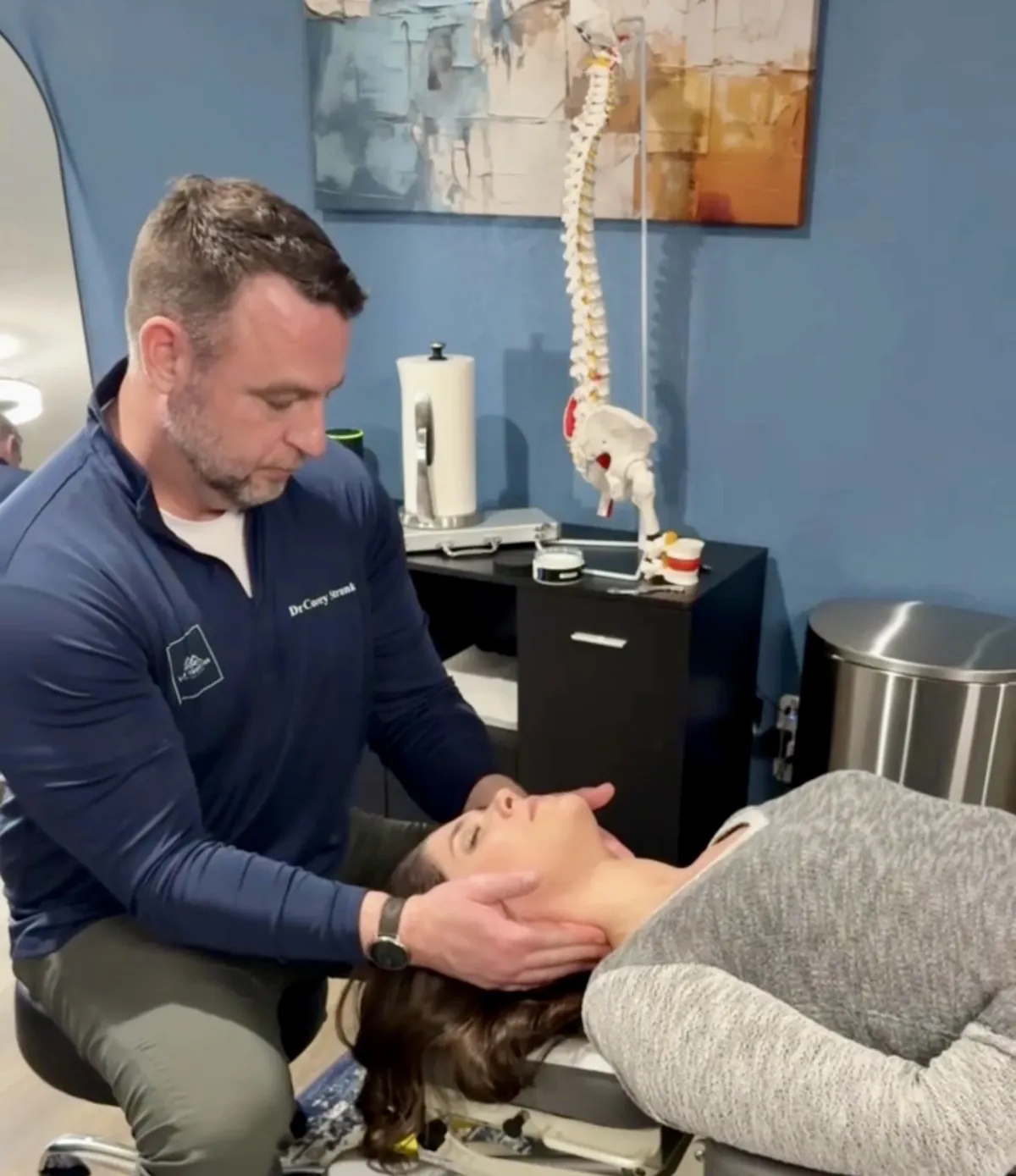
Neck pain often comes with stiffness, shoulder tightness, headaches, or limited motion. We look for mechanical and lifestyle factors that may be contributing instead of assuming every neck needs the same treatment.
Neck pain often comes with stiffness, shoulder tightness, headaches, or limited motion. We look for mechanical and lifestyle factors that may be contributing instead of assuming every neck needs the same treatment.
What we assess
Desk posture, driving, phone use, sleep position, upper-back mobility, joint restriction, muscle tension, shoulder mechanics, and movement habits.
Our approach
Care can combine specific chiropractic adjustments, soft-tissue work, mobility and strength exercises, and practical changes to reduce repeated irritation.
When to get checked
Persistent or recurring stiffness, headaches associated with neck tension, reduced range of motion, and symptoms that keep returning despite stretching or massage.
A closer look
Neck pain is rarely just about posture
Posture can influence symptoms, but there is no single perfect sitting position that prevents every problem. We look at how long you stay in one position, how often you move, upper-back mobility, neck range of motion, muscle endurance, sleep, stress, training, and the specific positions that reproduce symptoms.
That helps us build practical changes instead of simply telling you to sit up straighter all day.
When the shoulder, upper back, and headaches matter
The neck does not work in isolation. Shoulder mechanics and upper-back mobility can change how much work the neck has to do, and some headache patterns overlap with neck tension and restricted motion. The exam helps determine whether those regions are part of the same pattern or separate issues.
A plan should restore options, not create fear of movement
The goal is to regain comfortable motion and confidence while gradually improving the strength and tolerance needed for work, driving, exercise, and everyday life. Advice should be specific enough to be useful without making normal movement feel dangerous.
Common questions
Questions we hear about this topic
Why does my neck feel tight again after massage or stretching?
Tension can return when the underlying workload, joint motion, muscle endurance, sleep, stress, or movement pattern has not changed. A broader exam can help identify which factors are relevant for you.
Can desk work cause neck pain and headaches?
Long periods of screen work can contribute to neck and upper-back fatigue and may aggravate headache patterns in some people. We look at the entire workday pattern rather than blaming one posture.
Do you use only forceful neck adjustments?
No. Technique is individualized. Care can include hands-on or lower-force approaches, upper-back work, soft-tissue treatment, mobility, exercise, or referral depending on the findings and patient preference.