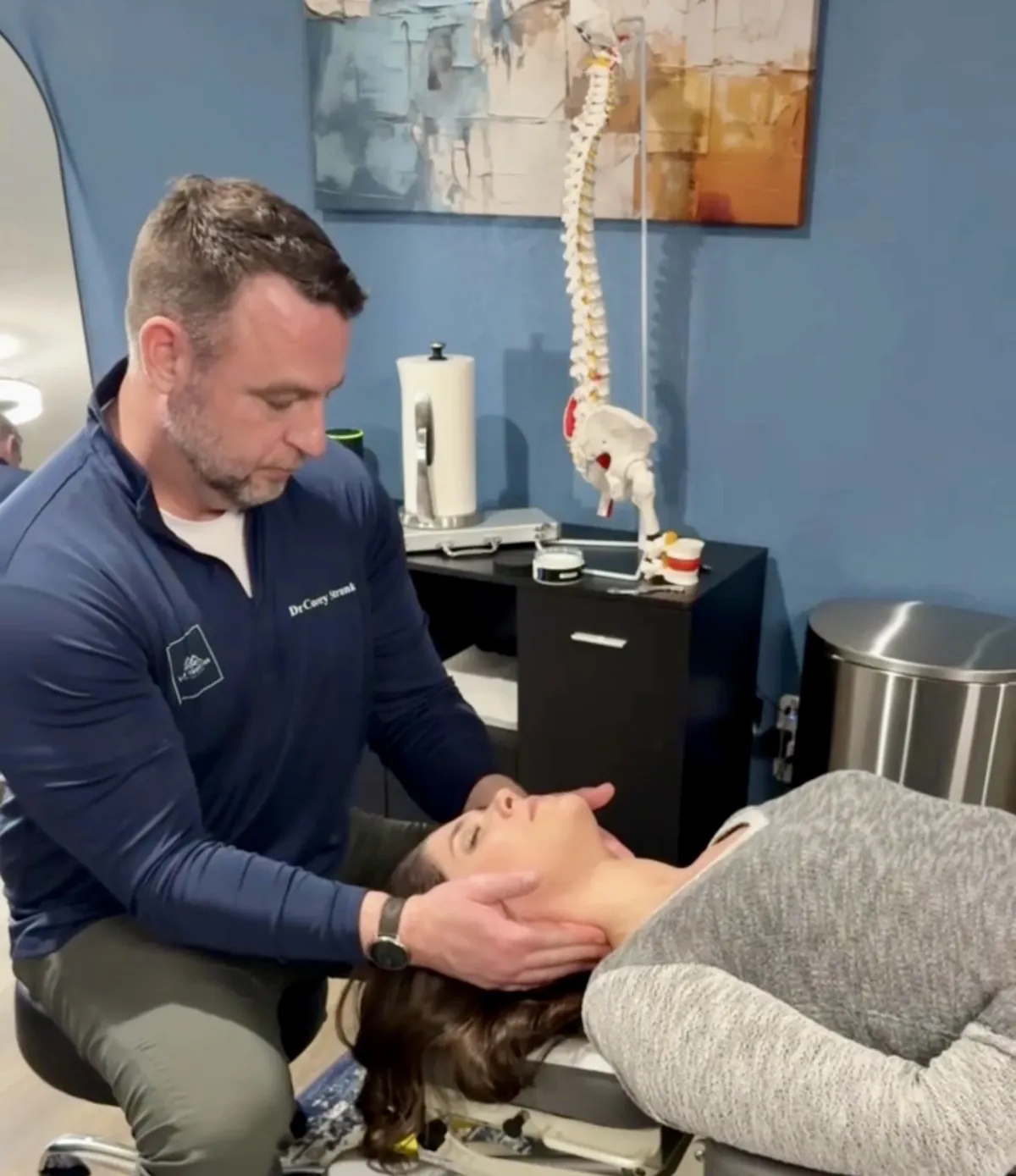
Recurring headaches can have many causes. Evaluation may include looking at factors such as neck tension, posture stress, sleep, restricted upper-spine motion, and other musculoskeletal factors that may be contributing before recommending care.
Recurring headaches can have many causes. Evaluation may include looking at factors such as neck tension, posture stress, sleep, restricted upper-spine motion, and other musculoskeletal factors that may be contributing before recommending care.
What we look for
The evaluation considers neck and upper-back mobility, muscle tension, desk and driving posture, sleep position, jaw tension, triggers, and symptom patterns.
Recurring patterns
The goal is to understand why the pattern keeps returning and address modifiable contributors rather than simply managing the next headache.
What to expect
A thorough first visit helps determine whether chiropractic and movement-based care are appropriate and provides a clear next-step plan.
Safety first
Sudden severe headaches or headaches with neurological symptoms, fever, vision changes, or recent head injury require prompt medical evaluation.
A closer look
The first question is whether the headache pattern is appropriate for musculoskeletal care
Headaches have many possible causes. We ask about onset, frequency, triggers, neurological symptoms, medication changes, head injury, sleep, jaw tension, neck symptoms, and other features before assuming that the neck is the cause.
When the pattern appears compatible with a musculoskeletal contribution, the examination can assess neck and upper-back motion, muscle tenderness, posture demands, and whether familiar symptoms change with movement or sustained positions.
The goal is better pattern control, not a promise to eliminate every headache
For an appropriate patient, care may focus on improving comfortable neck and upper-back motion, reducing repeated mechanical irritation, building endurance, and changing work or recovery habits that consistently trigger symptoms. Migraine and other primary headache disorders may require medical management even when neck tension is also present.
Common questions
Questions we hear about this topic
Do you treat migraines?
We can evaluate patients who have migraines or migraine-like symptoms, but migraines can have multiple drivers and may require medical management. The examination helps determine whether a musculoskeletal component is present and whether chiropractic care is appropriate.
How are neck-related headaches different from other headaches?
Neck-related headache patterns often occur with neck pain, restricted motion, or symptoms linked to certain neck positions. That pattern still needs to be assessed rather than assumed.
When should a headache be treated as urgent?
A sudden severe headache or a headache accompanied by new neurological symptoms, fainting, confusion, fever with neck stiffness, vision loss, or significant head trauma needs urgent medical evaluation.
From Dr. Corey's video library
Watch the explanation
Can Chiropractic Help Headaches?
How upper neck mobility and muscle tension contribute to recurring tension headaches.