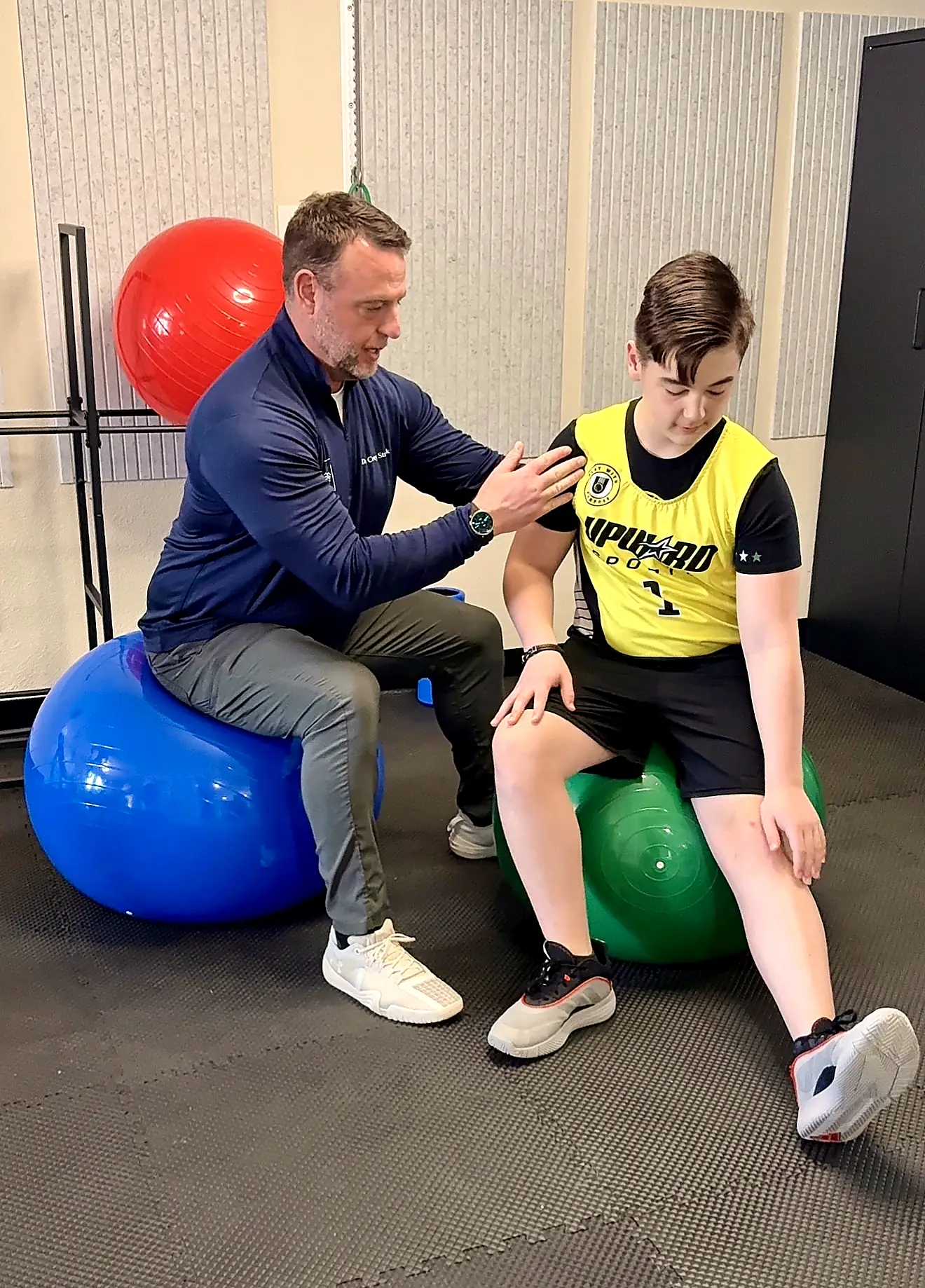
Every service is delivered personally by Dr. Corey. Care is selected based on your history, examination, movement, goals, and what is clinically appropriate.
The service mix is intentionally integrated: the examination determines whether a patient needs joint-focused care, movement work, progressive exercise, soft-tissue treatment, practical guidance, referral, or some combination of those options.
Chiropractic Adjustments
Specific hands-on or low-force techniques selected after a thorough examination to improve joint motion and function.
Ongoing care for patients who want to maintain mobility, support function, and stay proactive after active symptoms improve.
A closer look
Why the services are designed to work together
An adjustment, exercise, soft-tissue technique, or ergonomic recommendation is a tool—not a complete philosophy of care. The examination determines which tools make sense, and the mix can change as the patient progresses.
For example, hands-on care may be useful when comfortable joint motion is limited, while rehabilitation can build the strength and control needed to tolerate work, exercise, parenting, or sport. Soft-tissue treatment can be added when a specific tissue restriction or sensitivity is relevant. Not every patient needs every service.
What individualized rehabilitation means here
Rehabilitation is not a generic sheet of exercises. The starting point is chosen from the examination and your current capacity. Exercises are progressed when they become too easy or when the next stage of your goal requires more strength, control, speed, or endurance.
Common questions
Questions we hear about this topic
Do I need an adjustment at every visit?
Not necessarily. The treatment mix should follow the findings, your goals, and how you are progressing rather than a rule that every visit must look the same.
What is IASTM?
Instrument-assisted soft-tissue mobilization uses a handheld tool to apply controlled pressure to soft tissues. It can be used as one part of a broader plan when the examination suggests it may be helpful.
Will I get exercises to do at home?
When home exercise is useful, it is selected to support the goals of care and should be simple enough to perform consistently. The program can progress as your capacity improves.
From Dr. Corey's video library
Watch the explanation
What Is Myofascial Release?
How targeted soft-tissue work helps relieve muscle tension and support joint movement.