By Dr. Corey Strunk | Firm Foundation Wellness Center | Keller, Texas
When you choose a chiropractor, you deserve to understand the education and experience behind the care you receive. What do chiropractors study? How are we trained to evaluate muscles, joints, and nerves? And what do we learn about X-rays?
Chiropractic education includes substantial study of the human body, clinical examination, diagnostic imaging, and supervised patient care. That foundation matters because a thoughtful treatment plan begins with understanding the problem.
At Firm Foundation Wellness Center in Keller, my approach also draws on years in exercise science, personal training, and rehabilitation settings. Here is how that background connects to the care I provide.
What education does a chiropractor receive
In the United States, chiropractors complete college prerequisites followed by a Doctor of Chiropractic degree program. The Council on Chiropractic Education’s current standards require at least 4,200 instructional hours, or an approved equivalent, integrating academic and clinical education. [1]
Required subjects include anatomy, physiology, pathology, biomechanics, orthopedics, neurology, diagnostic imaging, rehabilitation, and clinical decision-making. Students also study professional ethics and communication. [1]
This education develops the knowledge needed to examine a patient, consider possible explanations for symptoms, and decide whether chiropractic care is appropriate. Texas law specifically recognizes evaluating and diagnosing the biomechanical condition of the spine and musculoskeletal system as part of chiropractic practice. [2]
For patients, the value of that training should be visible in the questions your chiropractor asks, the examination performed, and the explanation you receive.
How neurology fits into chiropractic care
Movement and sensation depend on the nervous system. When someone describes tingling, weakness, radiating pain, or a change in how they walk, neurological examination can help clarify what needs further evaluation.
Parker University’s published Clinical Neurology course provides a concrete example of this training. It covers neurological assessment, including strength, sensation, reflexes, cranial nerves, and gait, along with clinical reasoning about neurological findings. [3]
In practice, relevant findings must be considered alongside the patient’s history and the rest of the examination. The purpose is to understand whether a presentation fits the care being considered or calls for additional medical evaluation.
General chiropractic education and a neurologist’s specialty training are different qualifications. A chiropractor’s neurological knowledge supports appropriate examination, clinical decisions, and referral within the chiropractor’s scope of practice.
What chiropractors learn about X rays and imaging
Diagnostic imaging is a required part of chiropractic education. It involves learning to interpret images and understanding how the findings relate to a person’s symptoms and examination. [1]
Parker’s current Clinical Imaging IV course, for example, describes a systematic approach to interpreting musculoskeletal imaging. It includes recognizing imaging appearances associated with bone disease, infection, and other conditions that may require medical care. Its Radiographic Examination course addresses when X-rays are needed, patient protection, report writing, additional imaging, and communication with specialists. [4, 5]
That education helps chiropractors use imaging as part of a clinical assessment. Some chiropractors pursue further specialization: Parker offers a separate three-year diagnostic imaging residency designed to prepare graduates for chiropractic radiology board examinations. That specialty training is distinct from the standard chiropractic degree. [6]
Good imaging judgment also includes knowing when a scan is unlikely to help. The American College of Radiology considers initial imaging usually inappropriate for uncomplicated low back pain without red flags. Imaging should answer a relevant clinical question. [7]
At Firm Foundation, I refer patients to an outside imaging facility when imaging is indicated. I consider relevant imaging and radiology reports alongside the history and examination, and arrange further evaluation when needed. Patients deserve an explanation of why a study is being recommended and how it could affect their care.
The education and experience I bring to Keller
My interest in how the body moves began well before chiropractic school. Each stage of my career contributed a different perspective that I bring into the examination room today.
Exercise and sports science. I earned my bachelor’s degree in Exercise and Sports Science from Texas State University, with a minor in Psychology. That foundation shaped my understanding of movement, exercise, and the human side of making lasting changes.
Physical therapy technician experience. I spent three years working as a physical therapy technician, including experience at Central Texas Medical Center. Working in rehabilitation settings introduced me to the patience, consistency, and teamwork involved in helping people regain function.
A decade of personal training. I spent approximately ten years as a personal trainer, including running my own training business. That work gave me extensive experience observing movement, teaching exercises, and adapting activity to different abilities and goals.
Spinal cord injury recovery settings. My background includes work with Victory Walk in Arkansas and Project Walk in Austin. Those experiences deepened my appreciation for the relationship between neurological function, movement, and the everyday activities people value.
Doctor of Chiropractic education. I earned my Doctor of Chiropractic degree from Parker University in 2018, graduating with honors and a 3.7 GPA. My chiropractic education built on the movement and rehabilitation experience I had already developed.
Clinical experience. Since graduating, I have worked in chiropractic and medically integrated settings, including injury-focused care. I brought that experience with me when I founded Firm Foundation Wellness Center in Old Town Keller.
What that background means for your appointment
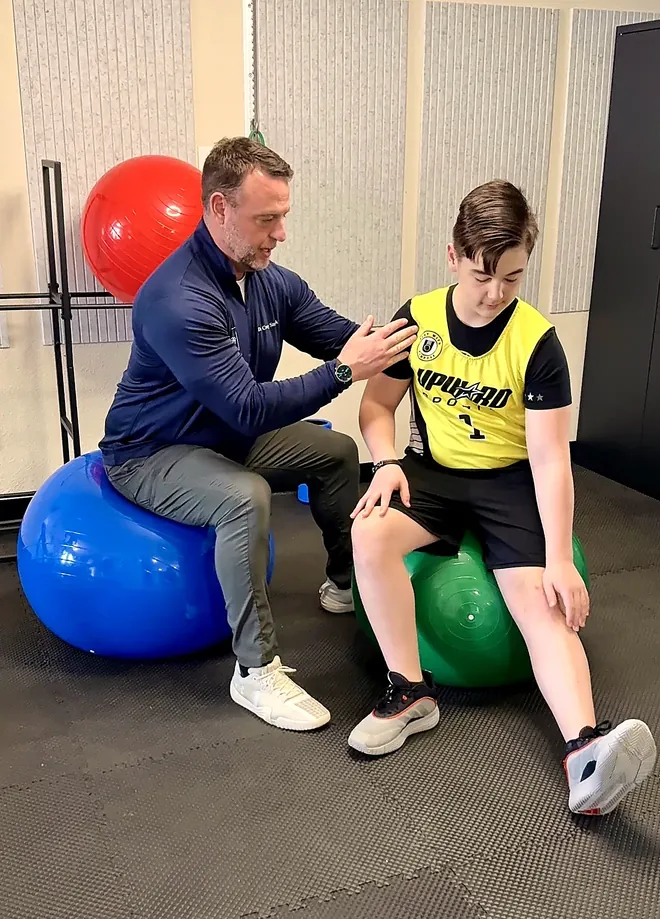
When someone comes in with recurring discomfort, I want to understand what they are experiencing and how it affects their life. I also want to see how they move and learn what their work, training, and daily activities ask of their body.
Depending on the concern, an examination may include movement assessment, joint mobility, strength testing, orthopedic tests, and relevant neurological testing. I use the findings to explain the working diagnosis and discuss appropriate next steps.
Care may include chiropractic adjustments, soft-tissue work, rehabilitation exercises, or practical changes to daily activity. The plan should fit the person and be reassessed as symptoms and function change.
My background is one reason movement and rehabilitation are central to this practice. Helping you understand your body and take an active role in your care is part of the appointment.
Professionalism is something you should experience
Texas chiropractors are regulated by a state licensing board. The licensure-by-examination pathway includes national board examinations and an examination on Texas chiropractic law. Continuing education is also part of the profession’s ongoing requirements. [2]
For me, professionalism also means listening carefully, explaining the findings in plain language, discussing reasonable options and relevant risks, and respecting your decisions. It means being honest when the picture is uncertain and involving another healthcare professional when that would serve you best.
I built Firm Foundation Wellness Center around one-on-one time so there is room for those conversations. My goal is for you to leave with a clearer understanding of your situation and the reasoning behind your care.
If you are looking for a chiropractor in Keller who brings a background in movement, rehabilitation, and individualized care, I would welcome the opportunity to meet you.
Learn what to expect at your first visit or schedule an appointment at Firm Foundation Wellness Center.
Firm Foundation Wellness Center | 140 Pecan Street, Keller, TX 76248
Sources and further reading
- Council on Chiropractic Education. 2026 Accreditation Standards, including curriculum and instructional-hour requirements.
- Texas Occupations Code Chapter 201. Sections 201.002, 201.304, and 201.356 address scope, examinations, and continuing education.
- Parker University Clinical Neurology. Published Doctor of Chiropractic course description.
- Parker University Clinical Imaging IV. Published Doctor of Chiropractic course description.
- Parker University Radiographic Examination. Published Doctor of Chiropractic course description.
- Parker University Diagnostic Imaging Residency. Description of additional specialty training in chiropractic radiology.
- American College of Radiology Low Back Pain Criteria. Initial imaging recommendations for low back pain without red flags.
Sources accessed November 5, 2026.